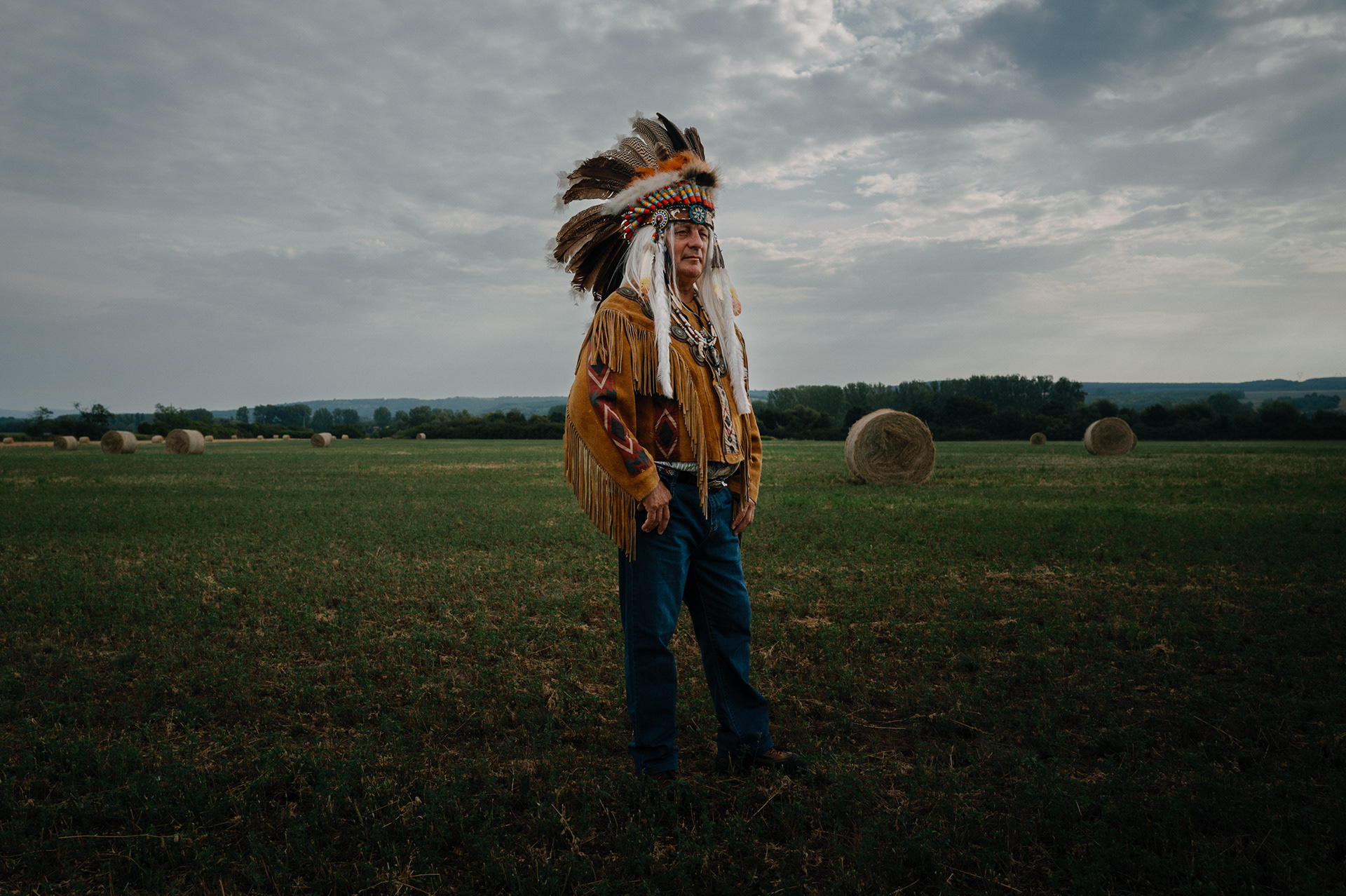
The Last Warrior of Halimba is a portrait of Tibor, a man in his early sixties living in the small Hungarian village of Halimba, two hours from Budapest. A grandfather and the leader of a community garden in nearby Ajka, Tibor has spent his life cultivating a deep fascination with Native American culture. What began in childhood—nourished by books, films, and wilderness camping—has grown into a personal practice that shapes how he sees himself and moves through the world.
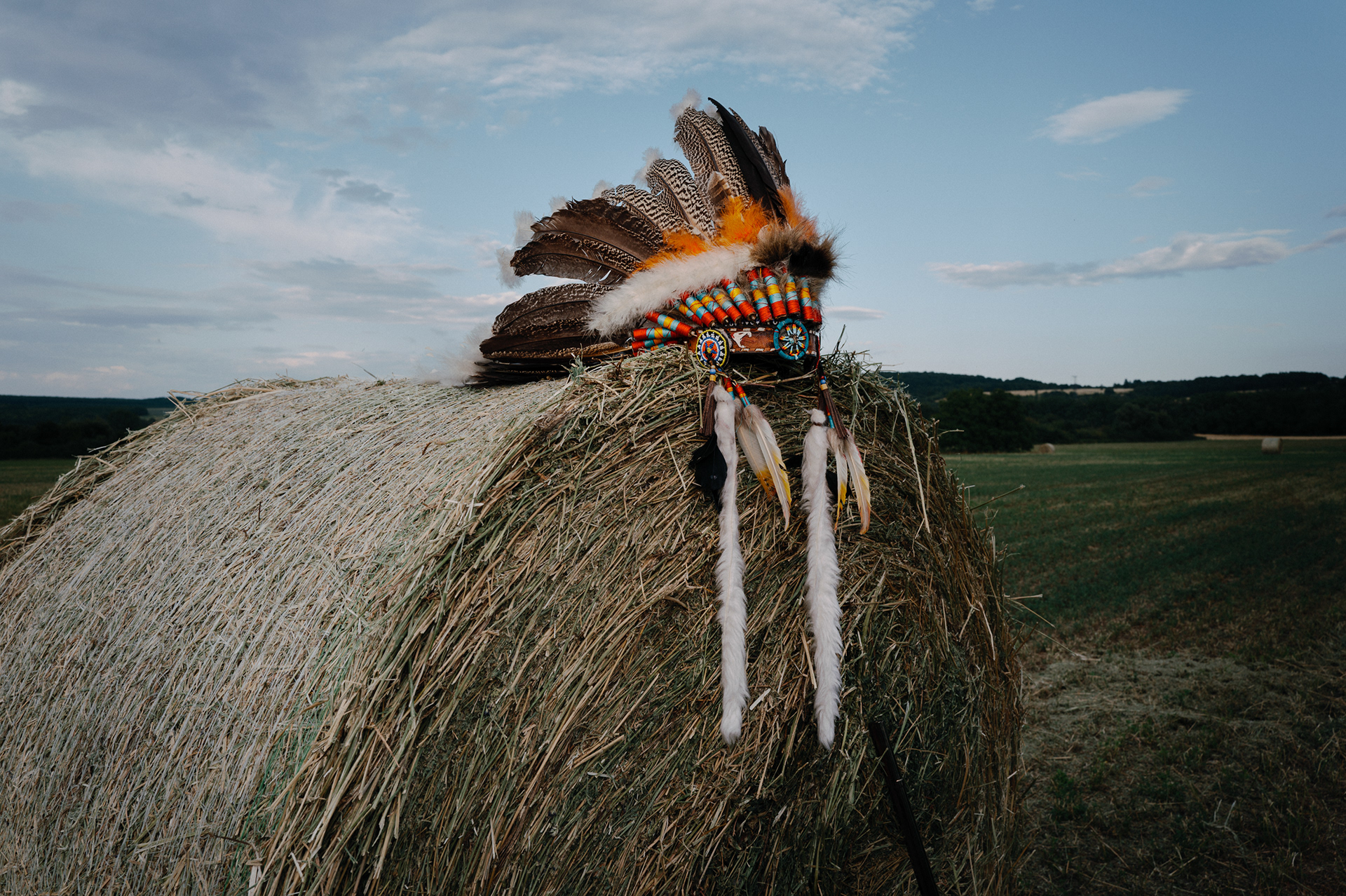
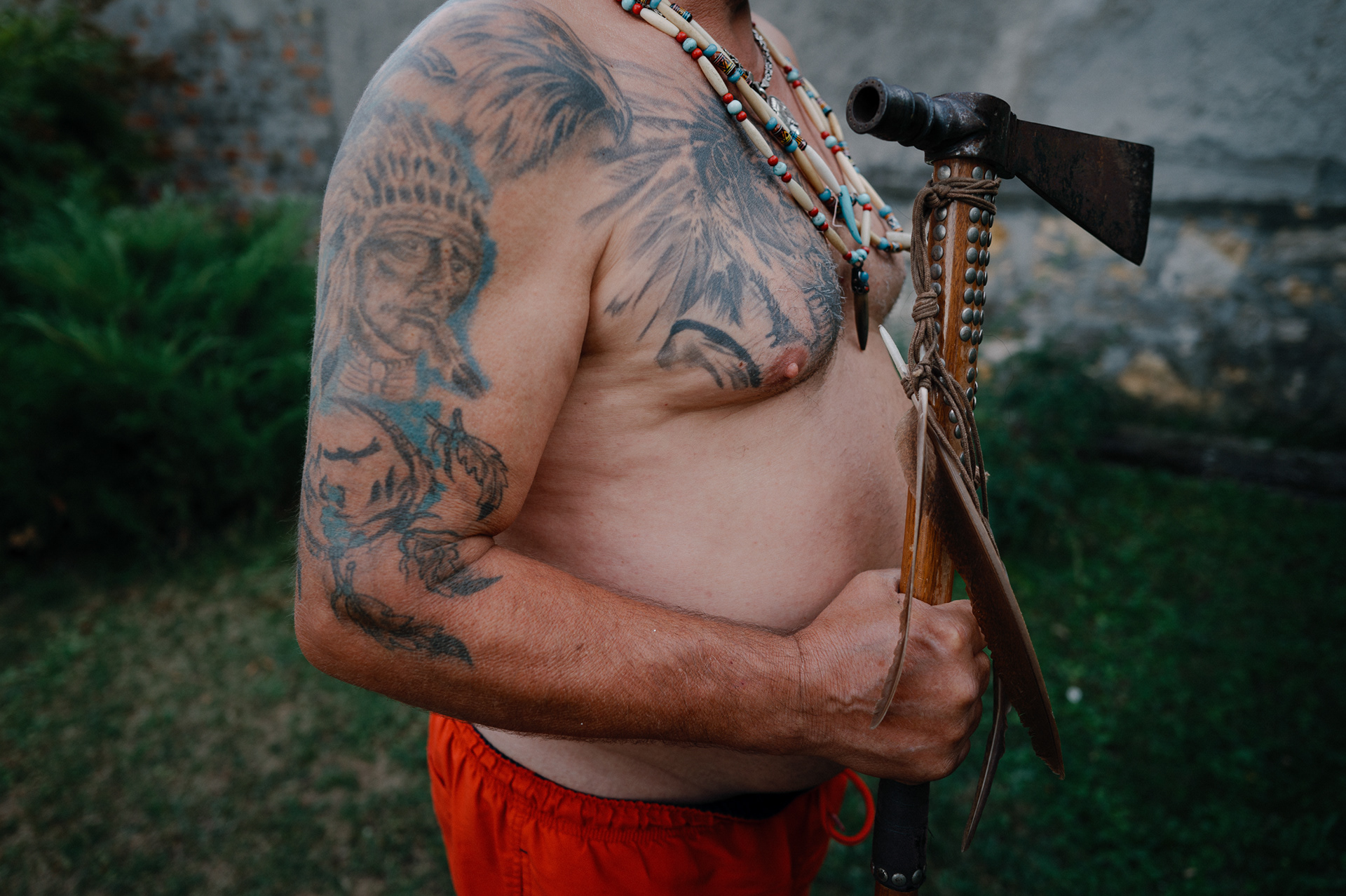
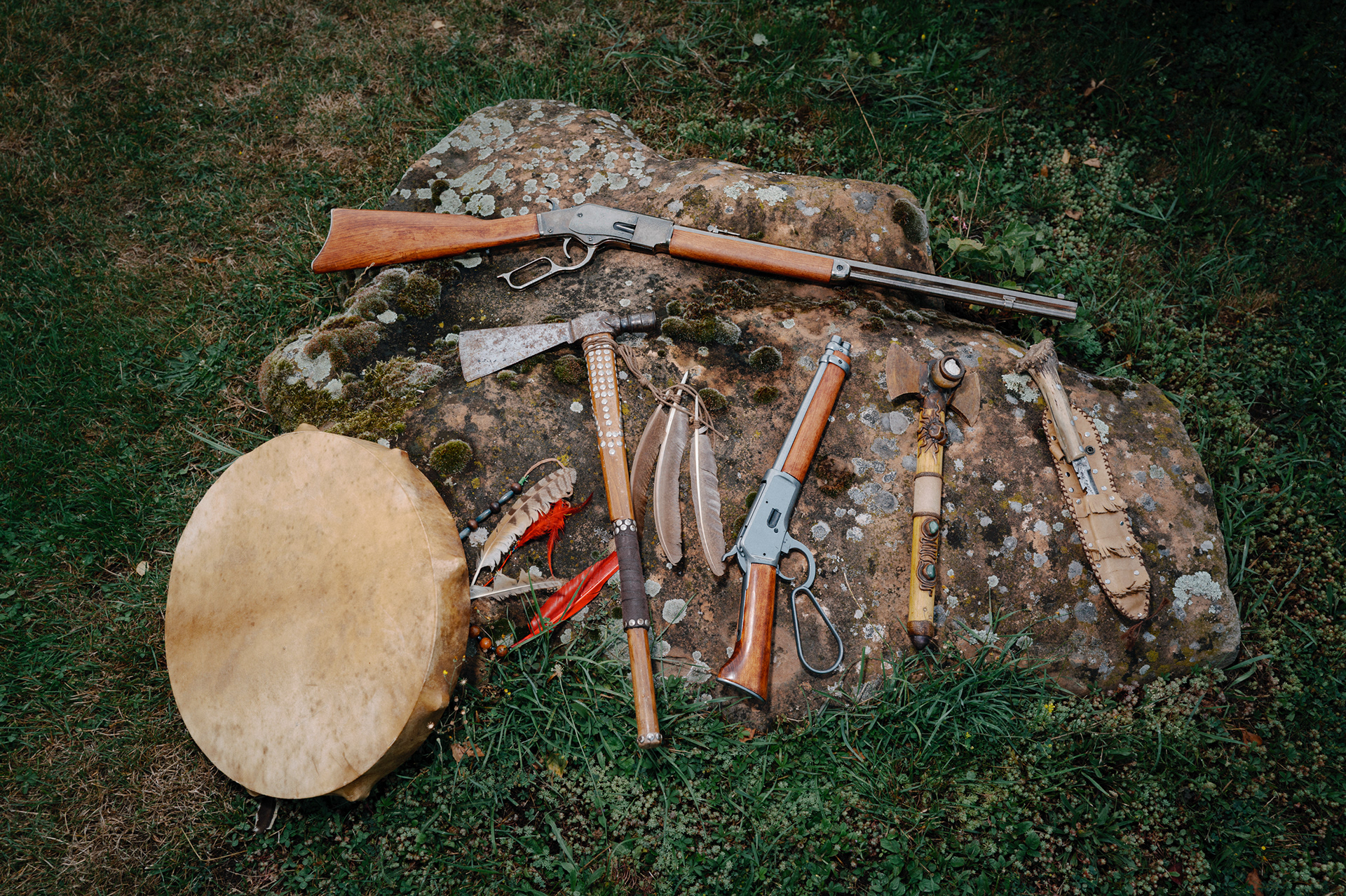
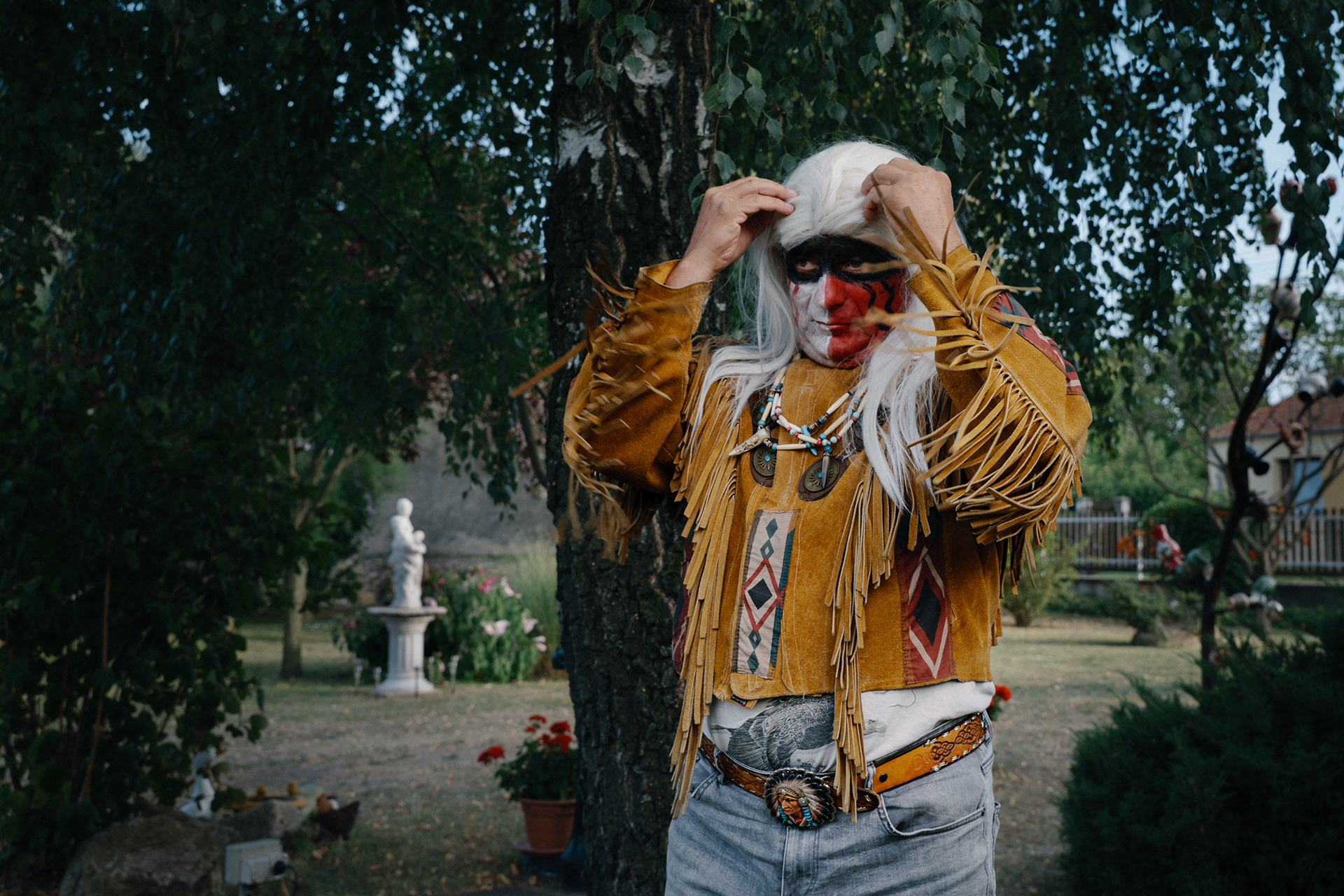
He crafts feathered headdresses, beadwork, and garments with careful attention; he collects replica weapons and rides a large chopper motorcycle; he grows and prepares herbs and restores old objects. His skin carries tattoos, including a portrait of Geronimo, whom he regards as a symbol of courage and resistance—the last free Apache warrior. When Tibor dresses in the attire he creates, sometimes painting his face as well, he is not performing. He is aligning himself with values he deeply admires: togetherness, resilience, wisdom, and a profound respect for nature.
What makes his story compelling is not imitation, but resonance. In rural Hungary, far from the geography and history of the cultures he admires, Tibor has carved out a form of belonging chosen rather than inherited. His fascination does not stem from activism or reenactment groups; he remains largely outside organized circles. Instead, this devotion is a private, intuitive journey—one that merges memory, imagination, and lived experience.
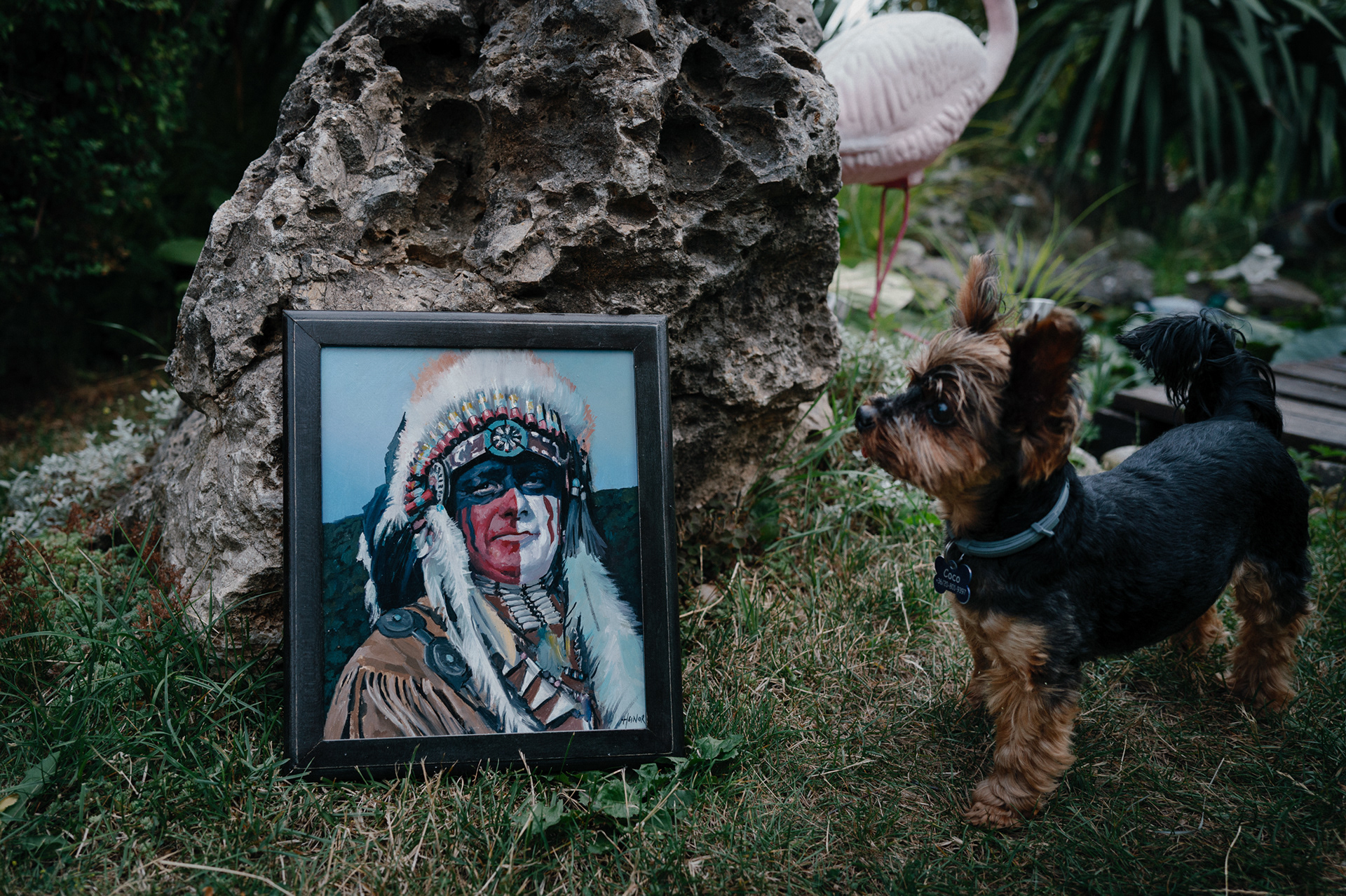
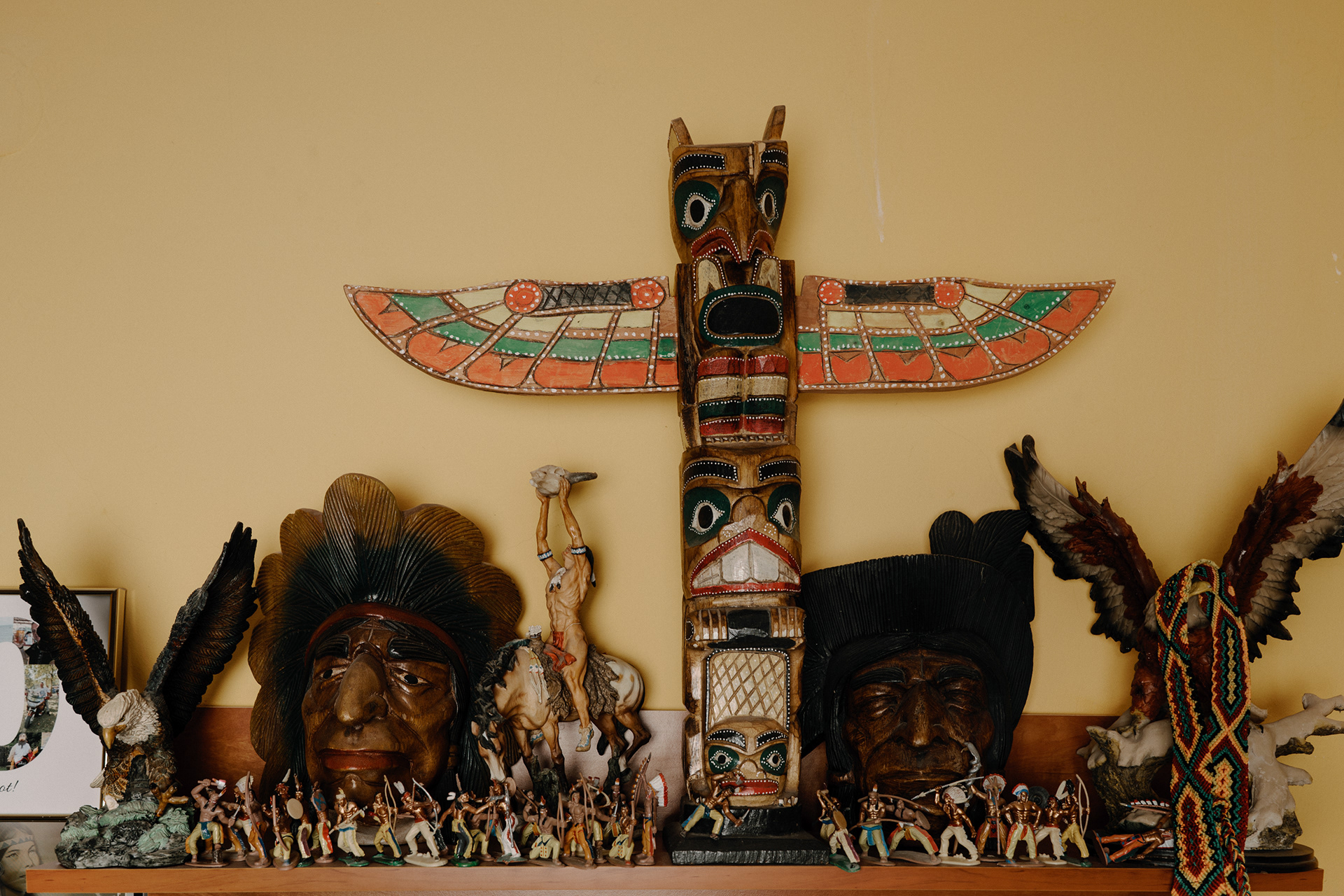
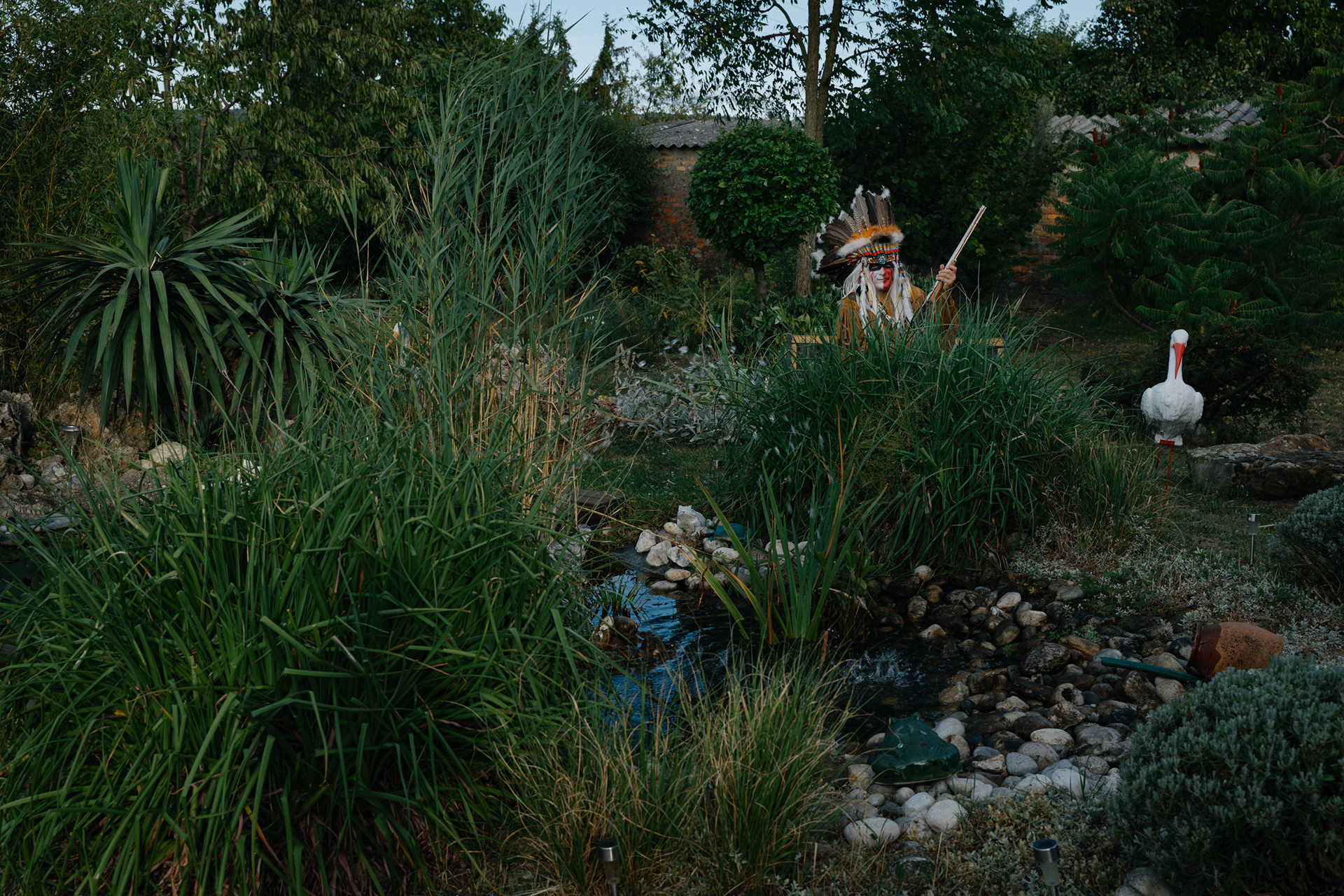
The photographs explore this world through proximity and quiet observation. They follow Tibor at home and in the spaces he has shaped around himself: the garden, the tools, the textiles, the objects that trace the contours of a life built from chosen symbols and self-fashioned myths. They show the harmony and contradictions of a life where rural European reality meets a self-constructed spiritual lineage. Rather than judging or romanticizing, the series reflects on how identity can be shaped by personal mythologies, how distant cultures can offer emotional refuge, and how one man, in a small village, becomes the custodian of a story he chose for himself.
The Last Warrior of Halimba invites viewers to consider identity not as a fixed inheritance, but as an ongoing act of imagination, longing, and self-creation.